
Why Modern Hangars Are Going Media-Free
The Hidden Cost of "Free" Media
Plastic media is cheap — about $2 per pound delivered, and most shops use 200–500 pounds per month. That's $400–$1000 in media cost. But media cost is a small fraction of the total cost of media-based cleaning. The real expenses hide elsewhere:
- Filtration: $150–$400/month for replacement filters in the recovery system
- Compressed air: Blast cabinets typically pull 20–40 CFM at 80–100 psi, adding $300–$600/month to the electricity bill
- Cleanup labor: 2–4 hours per shift recovering media and cleaning the work area
- Disposal: Spent media contaminated with paint and metal particles is hazardous waste in many jurisdictions
- Embedded particles: Media particles embedded in the substrate are corrosion initiation sites and interfere with conversion coating
Add it up and a "$2 per pound" media operation usually runs $4,000–$8,000 per month all-in for a small shop — closer to $20,000+ for a busy hangar.
Environmental Impact
Beyond the cost line items, media-based cleaning has environmental consequences that are getting harder to ignore:
Particulate Emissions
Even with a well-maintained recovery system, blast cleaning generates 500–1000 mg/m³ of airborne particulate during operation. PM2.5 and PM10 fractions are subject to OSHA respirable dust standards and EPA NESHAP rules. Compliance requires monitored ventilation — 5,000+ CFM for media blasting vs. 400 CFM for laser cleaning. Energy-intensive, expensive to maintain.
Hazardous Waste Generation
Spent blast media contaminated with aircraft paint contains hexavalent chromium (from chromate primers), lead (legacy paints), cadmium (some plating systems), and assorted organic solvents. EPA classifies the waste as F001-F005 listed hazardous — cradle-to-grave manifested disposal at $4–$8 per pound. A typical shop generates 5,000+ pounds of this per year.
Water Contamination
Wet blasting and post-blast wash-down create contaminated water that requires pre-treatment before discharge. Many hangars install $20,000–$50,000 wastewater treatment systems specifically for this stream.
The Laser Alternative
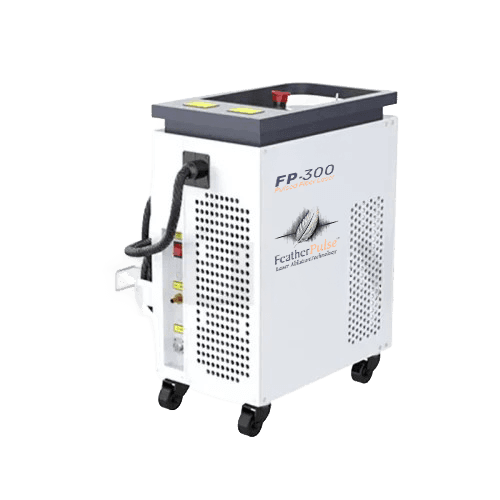
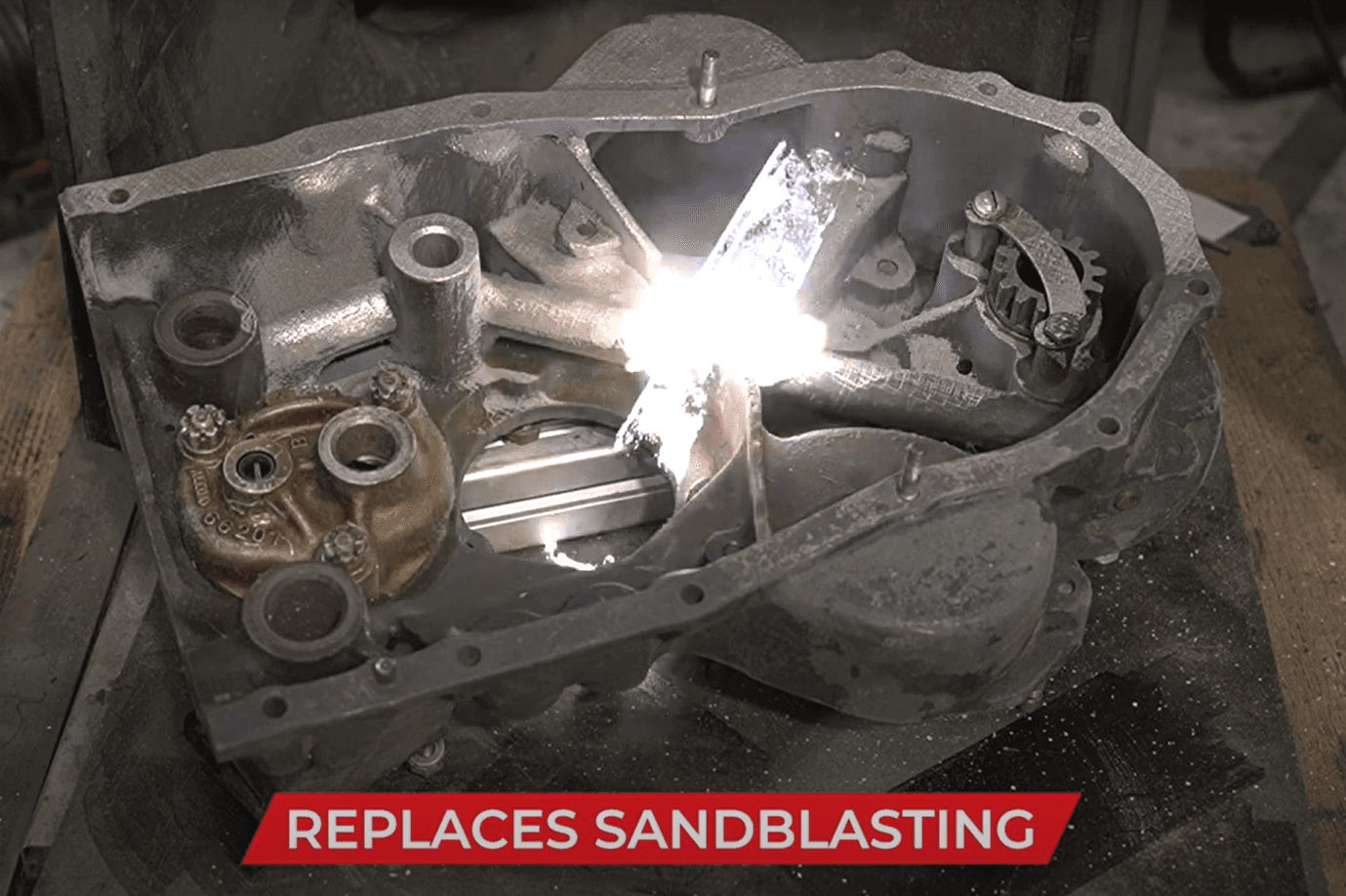
Laser cleaning eliminates the entire media supply chain. The "consumable" is photons, generated on-demand from a wall outlet:
| Metric | Media Blasting | FP-300 Laser |
|---|---|---|
| Particulate emission | 500–1000 mg/m³ | 0.5 mg/m³ |
| Ventilation requirement | 5,000 CFM | 400 CFM |
| Annual hazardous waste | 5,000 lbs | 50 lbs (filter changes only) |
| EPA waste classification | F001–F005 (hazardous) | Non-hazardous solid waste |
| Disposal cost / lb | $4–$8 | $0.10 |
| Compressed air | 30 CFM continuous | None |
| Worker comp claim incidence | 1.2/year/100 workers | ~ 0.01/year/100 workers |
The Workflow Difference
Beyond the metrics, the day-to-day workflow in a media-free hangar is fundamentally different:
- No media to recover, sift, or replace between jobs
- No compressed-air buildup or pressure-drop diagnostics
- No wet blast cabinet maintenance or wastewater handling
- Operators wear standard laser safety glasses instead of full-PAPR systems
- Adjacent aircraft don't have to be moved — the laser's NHZ is small enough that work continues in the next bay
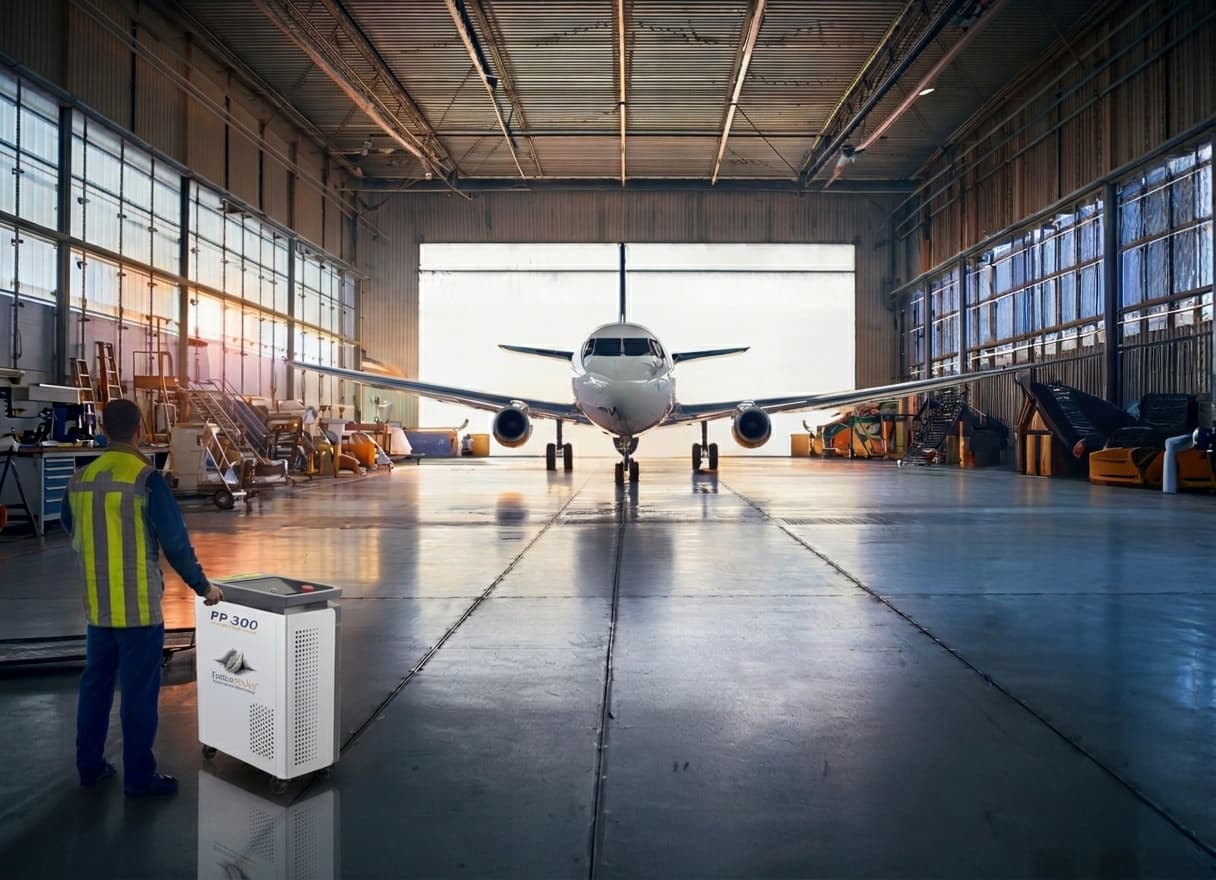
- Cleaning happens in the open hangar bay, not in a dedicated blast room
Several hangars that converted from media to laser report reclaiming 200–400 sq ft of floor space previously dedicated to blast cabinets and media handling. That's space repurposed for additional work bays or parts storage.
The Transition Period
Most shops don't go media-free overnight. The typical adoption pattern:
- Months 1–3: FP-300 used for high-value work — control surfaces, rivet lines, jamb cleaning. Media systems retained for full strips.
- Months 4–9: Operators get comfortable with laser parameters; laser handles 60–70% of cleaning hours.
- Months 10–18: Media usage drops to occasional thick-coating jobs and odd-geometry parts. Most shops go fully media-free by month 18.
- Year 2+: Blast cabinets sold or repurposed; floor space reclaimed; permits surrendered.
The financial picture matures with the workflow. Year-one savings typically pay for the FP-300 investment 4–6× over. Year-two savings stack to roughly equal the entire prior media operating budget — a permanent line-item reduction.
The Regulatory Tailwind
State and federal regulations on hexavalent chromium, lead-containing paint waste, and PM2.5 emissions continue to tighten. Hangars that already operate media-free are insulated from those changes; hangars still using media are watching their compliance costs creep up year over year. The regulatory direction is clear, and laser-equipped shops have already adapted.
Going media-free isn't just a cleaner workflow. It's a hedge against the next round of environmental regulation — whatever it turns out to be.